By admin on 11 Jul 2026
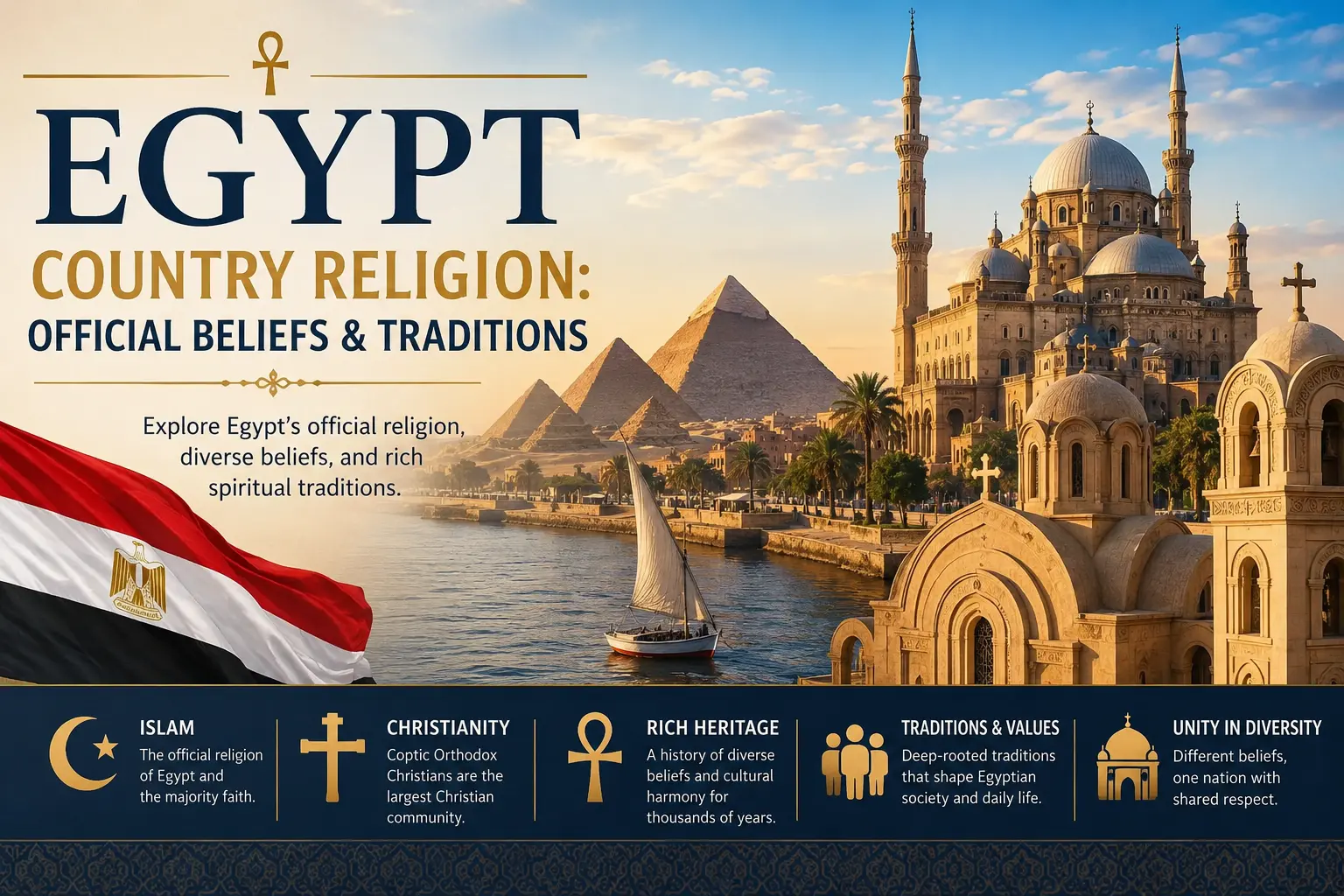
Egypt is known for its rich history, vibrant culture, and lasting traditions. One of the most important parts of its identity is religion. For thousands of years, religious beliefs have shaped the country’s communities, values, celebrations, and daily life.
Many people search for information about the Egypt country religion or wonder about the official Egypt religion. While Islam is the country’s official religion, Egypt is also home to one of the world’s oldest Christian communities. This religious diversity has helped shape the nation’s cultural heritage over many centuries.
This guide explains the main religion in Egypt, the official religion, other faiths practiced across the country, and the role religion continues to play in modern Egyptian society.
Why Is Religion an Important Part of Egypt?
Religion has influenced Egypt for thousands of years. It is reflected in the country’s traditions, architecture, celebrations, education, and family values.
Today, religion continues to be an important part of everyday life. It inspires community gatherings, national holidays, charitable work, and cultural customs. At the same time, Egypt’s long history has created a society where different religious communities have lived together for centuries.
Understanding religion provides a better understanding of Egypt’s culture and its people.
Want to explore Egypt? Then do check our Egypt travel packages.
What Is the Egypt Country Religion?
The Egypt country religion is predominantly Islam. Around 90% of Egyptians identify as Muslims, and the majority follow Sunni Islam.
Islam arrived in Egypt during the 7th century and has remained the country’s largest religion ever since. Today, Islamic traditions influence many aspects of public and private life, including religious celebrations, family customs, and community values.
Mosques can be found in cities, towns, and villages throughout Egypt. The call to prayer is heard five times a day, marking the daily prayer schedule observed by practicing Muslims.
Although Islam is the dominant religion, Egypt is also home to several other religious communities that contribute to the country’s cultural identity.
What Is the official religion of Egypt?
Many people ask whether the main religion and the official religion are the same.
The answer is yes. The official Egypt religion is Islam.
Egypt’s Constitution recognizes Islam as the state religion. It also states that Islamic principles are a primary source of legislation. Alongside this, the Constitution protects freedom of belief and allows recognized religious communities to practice their faith.
The official recognition of Islam reflects the country’s history and the beliefs of most of its population. At the same time, Egypt continues to celebrate the contributions of its diverse religious communities.
Which Other Religions Are Practiced in Egypt?
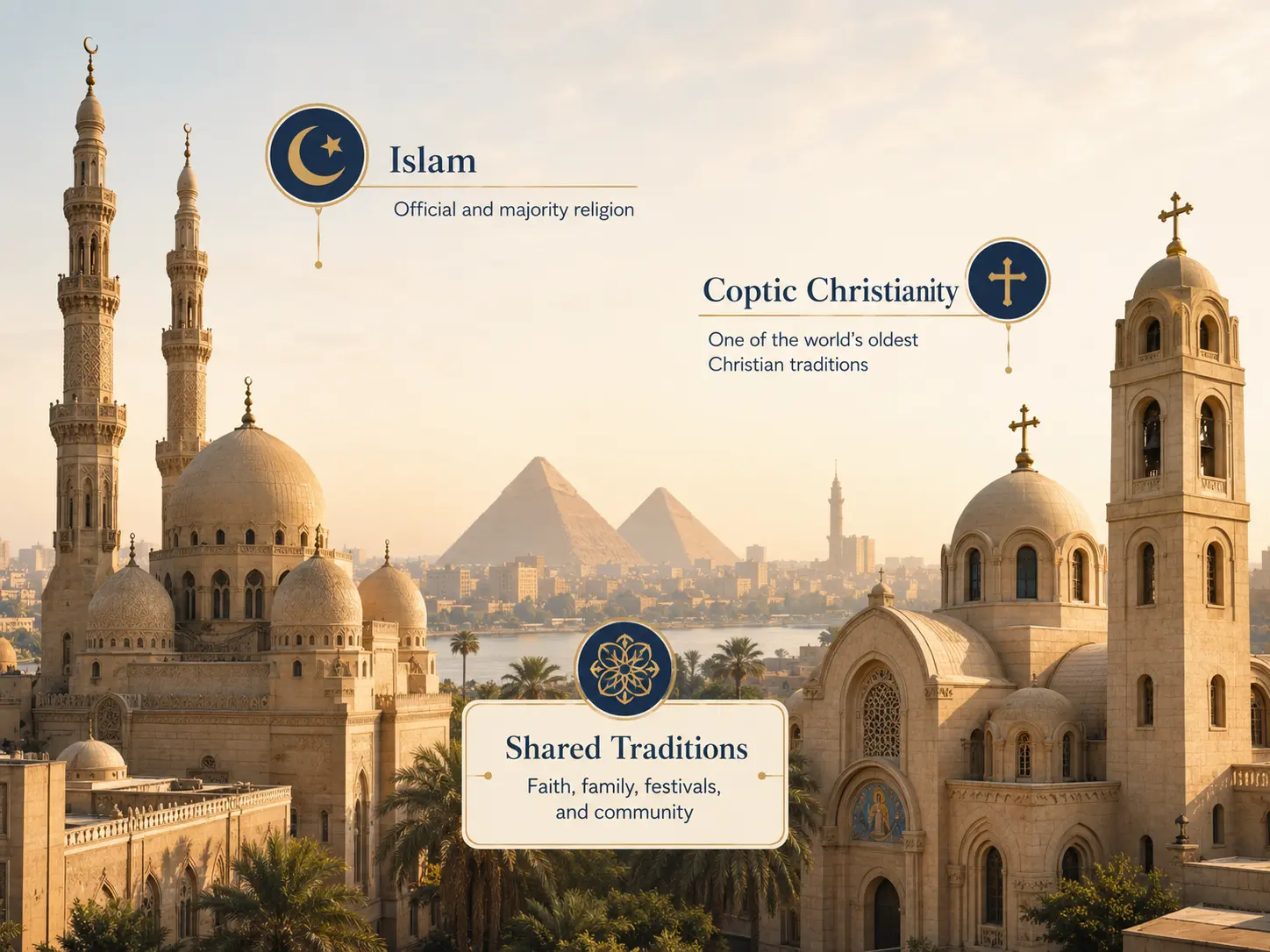
Although Islam is the largest religion, Egypt has a long tradition of religious diversity.
Coptic Orthodox Christianity
The largest religious minority is the Coptic Orthodox Christian community. Christianity reached Egypt during the first century, making the country home to one of the oldest Christian traditions in the world.
Coptic Christians celebrate their own religious festivals, maintain historic churches, and preserve traditions that have existed for nearly two thousand years.
Catholic and Protestant Communities
Egypt is also home to smaller Catholic and Protestant communities. These churches serve local congregations and contribute to the country’s religious landscape.
Jewish Community
Egypt once had a much larger Jewish population. Today, only a small Jewish community remains, but historic synagogues continue to represent an important part of Egypt’s multicultural history.
How Religion Influences Daily Life in Egypt
Religion is closely connected with everyday life across Egypt. Many traditions are shared by families and communities regardless of where they live.
Family Values
Family is one of the strongest foundations of Egyptian society. Respect for parents, grandparents, and older relatives is highly valued. Family gatherings are an important part of both religious and cultural celebrations.
Community Spirit
Many religious teachings encourage kindness, generosity, and helping others. Charitable activities are common throughout the year, especially during important religious occasions.
Daily Prayer
Practicing Muslims pray five times each day. The call to prayer is heard across many cities and towns, becoming a familiar part of daily life.
Modest Clothing
Clothing styles vary throughout Egypt. While modern fashion is common, modest dress remains an important cultural value, especially during religious events and in places of worship.
Religious Celebrations in Egypt
Religious festivals bring families and communities together. They are often filled with celebrations, shared meals, and acts of generosity.
Ramadan
Ramadan is the holiest month in Islam. During this month, Muslims fast from dawn until sunset while focusing on prayer, reflection, and charity.
Evenings become lively as families gather to break their fast together.
Eid al-Fitr
Eid al-Fitr marks the end of Ramadan. It is celebrated with special prayers, family visits, festive meals, and gifts.
Children often receive presents or money during the celebrations.
Eid al-Adha
Eid al-Adha is another major Islamic holiday. It honors faith, sacrifice, and generosity. Families gather for meals and many people donate food to those in need.
Coptic Christmas
Celebrated on January 7, Coptic Christmas is one of the most important religious events for Egypt’s Christian community. Churches hold special services, and families celebrate together.
Places of Worship in Egypt
Religion has inspired some of Egypt’s most beautiful architecture.
Mosques
Egypt is home to thousands of mosques, ranging from historic landmarks to modern neighborhood mosques. Many are admired for their impressive domes, minarets, and detailed Islamic art.
Churches
Historic churches can be found across the country, particularly in Cairo and other cities with large Christian communities. Many remain active places of worship today.
Synagogues
Several historic synagogues still stand as reminders of Egypt’s diverse religious heritage, even though the country’s Jewish community is now much smaller.
Religion and Egyptian Culture
Religion and culture often complement one another in Egypt.
Many traditions associated with hospitality, respect, generosity, and family life have both cultural and religious significance.
Guests are warmly welcomed into homes. Sharing meals with family and friends is considered an important tradition. Religious holidays often become opportunities for communities to come together and strengthen social bonds.
These values have remained an important part of Egyptian society for generations.
Common Misunderstandings About Religion in Egypt
People sometimes have misconceptions about religion in Egypt. Understanding the facts helps provide a clearer picture.
Egypt has only one religion.
No. While Islam is the majority and official religion, Christianity has a long history in Egypt, and other religious communities also exist.
Religion only matters during holidays.
Religion is present throughout the year. It influences traditions, family life, charitable activities, and many cultural customs.
Ancient Egyptian religion is still practiced.
Ancient Egyptian beliefs belong to history. Modern Egypt is primarily Islamic, with Christianity forming the largest minority religion.
Why Learning About Religion Helps You Understand Egypt
Religion is one of the foundations of Egypt’s national identity. It has influenced literature, architecture, music, art, education, and community life for centuries.
Learning about Egypt’s religious traditions also helps explain why many customs continue today. From family celebrations to national holidays, religion remains closely connected with everyday life.
Understanding these traditions offers a deeper appreciation of Egypt’s culture and heritage.
Conclusion
The Egypt country religion is an important part of the nation’s identity and cultural heritage. Islam is the official Egypt religion, and it has shaped many aspects of Egyptian society for centuries. Alongside Islam, Egypt is also home to one of the world’s oldest Christian communities and a rich tradition of religious diversity.
Understanding Egypt’s religions offers valuable insight into its history, customs, celebrations, and community values. Whether exploring the country’s past or learning about modern Egyptian society, religion provides an essential perspective on what makes Egypt unique.
Frequently Asked Questions
What is the Egypt country religion?
The Egypt country religion is Islam. Around 90% of Egyptians are Muslims, with Sunni Islam being the largest branch.
What is the official Egypt religion?
The official Egypt religion is Islam. It is recognized as the state religion under Egypt’s Constitution.
Is Christianity practiced in Egypt?
Yes. Christianity has been present in Egypt since the first century. The Coptic Orthodox Church is the country’s largest Christian denomination.
Does Egypt have religious diversity?
Yes. Along with Muslims, Egypt is home to Coptic Orthodox Christians, Catholics, Protestants, and a small Jewish community.
How does religion influence Egyptian society?
Religion influences family values, public holidays, charitable activities, community traditions, and many aspects of everyday life.
Why do people search for the official Egypt religion?
Many people want to understand Egypt’s cultural and historical background. Learning about the official religion provides helpful context for understanding the country’s traditions and society.
Categories
- Egypt and Jordan Tours (12)
- Egypt Destinations (44)
- Egypt Nile Cruises (50)
- Egypt Sightseeing (19)
- Egypt Tour Packages (30)
- infographics (1)
-

Nile Cruisers Reviews
30 Apr 2026
-

Misleading Claims & False Information – Nile Cruisers™ Official Notice
08 Feb 2026
-

“The Museum Xi Jinping Had to See And Why It Belongs on Your Itinerary Too”
18 Sep 2026
-
Is Egypt Expensive to Visit? A Complete Travel Budget
18 Sep 2026
-
My Morning at the Grand Egyptian Museum: What It’s Really Like to Visit in 2026
12 Sep 2026
-

Why a Luxury Nile Cruise Should Be at the Top of Your Bucket List
11 Sep 2026
-
My First Look at Mövenpick SB Hayah Dahabiya: Launch Day with Our Longtime Nile Cruise Partners
02 Sep 2026
-
What’s Really Included in an All-Inclusive Nile Cruise?
28 Aug 2026
-
Nile Cruisers Reviews
30 Apr 2026
-
Misleading Claims & False Information – Nile Cruisers™ Official Notice
08 Feb 2026
-
“The Museum Xi Jinping Had to See And Why It Belongs on Your Itinerary Too”
18 Sep 2026
-
Is Egypt Expensive to Visit? A Complete Travel Budget
18 Sep 2026
-
My Morning at the Grand Egyptian Museum: What It’s Really Like to Visit in 2026
12 Sep 2026
-
Why a Luxury Nile Cruise Should Be at the Top of Your Bucket List
11 Sep 2026






Comments