By Manal on 12 Sep 2026
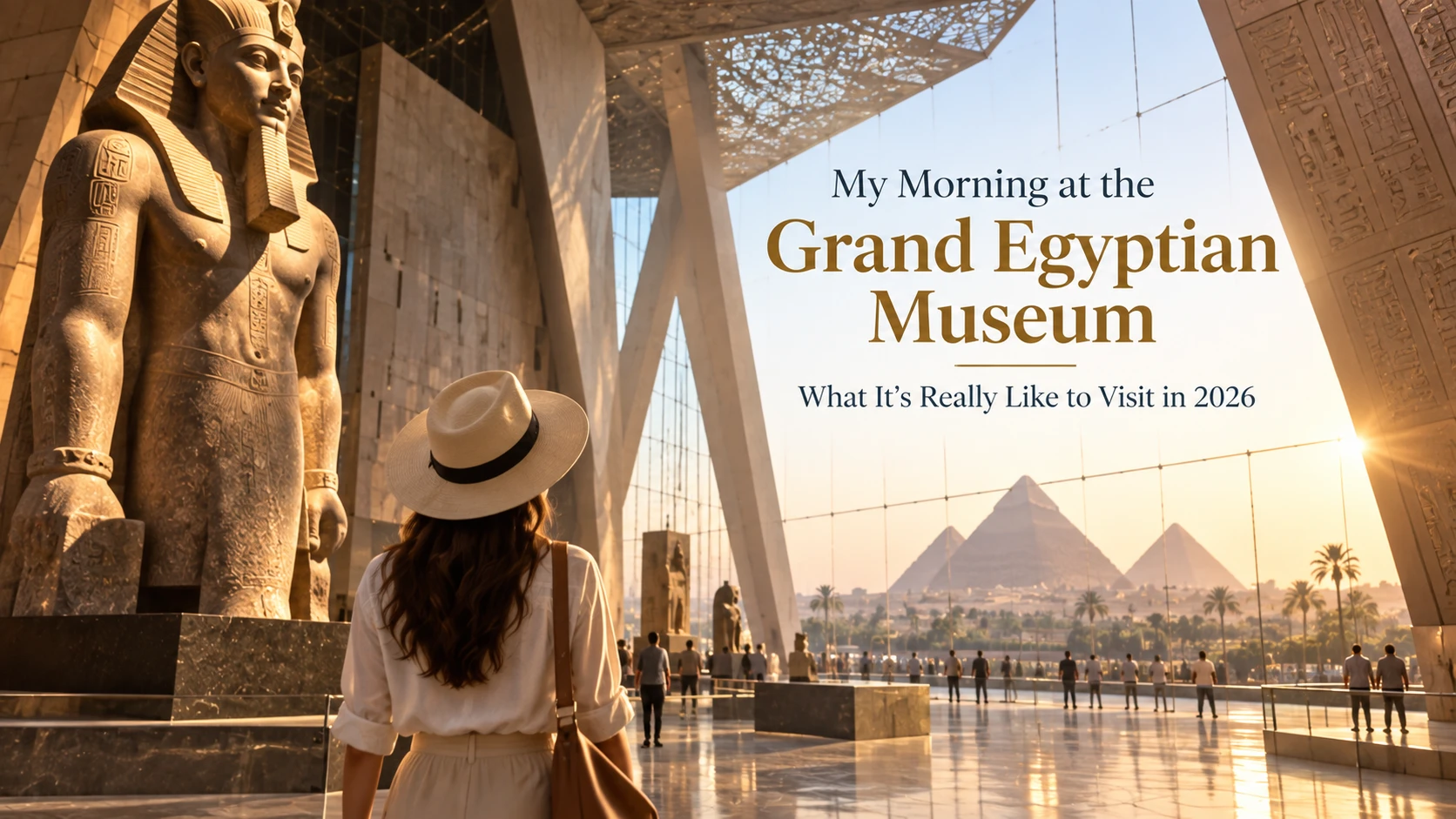
I’ve lived in Cairo my whole life, and I still wasn’t ready for how it felt to stand in front of that Ramesses II statue.
I’d put off visiting the Grand Egyptian Museum for months. Partly because I kept hearing conflicting things about how to even get a ticket, and partly because, honestly, when something is that close to home, you assume you’ll “get to it eventually.” Last week I finally went, and I want to walk you through exactly what the experience is like right now: the booking process, the new rules nobody warns you about, and the parts that genuinely caught me off guard.
Booking Is Nothing Like It Used to Be
The first thing I had to unlearn was the old habit of just showing up. Since the end of last year, the museum has moved to fully online, timed-entry ticketing; there’s no ticket window to walk up to anymore. Everything goes through the official platform, and you choose a two-hour entry slot in advance, so the museum can control how many people are inside the galleries at once.
I booked about two and a half weeks ahead, and I’d genuinely recommend building in that kind of lead time, especially if you’re coming during a weekend or a school holiday. I made the mistake of assuming I could decide “the morning of” like I would for most places in Cairo. I couldn’t. The slot I actually wanted, an earlier one to beat the midday heat on the plateau, was already gone by the time I looked three days out.

A few practical things I wish someone had told me beforehand:
- Your ticket is tied to your name and your exact time slot; it’s not transferable, and once you use it, that’s it. No slipping back in later if you leave.
- If you’re running late, don’t count on sliding into your original window. Ticket sales cut off before closing, and once a slot fills, it’s genuinely full. There’s a daily visitor cap now, noticeably lower than when the museum first opened, specifically so it doesn’t feel overcrowded.
- I paid online by card and had my confirmation QR code ready on my phone, though I’d suggest a screenshot as backup in case the signal near the plateau is patchy.
Arriving: Security Feels More Serious Than You’d Expect
I got there twenty minutes before my slot, which turned out to be exactly the right call. Security is thorough; bags get scanned, and there’s a real emphasis on keeping the collection protected, which makes sense once you’re actually inside and see what they’re protecting.
A few regulations stood out to me on arrival:
- No outside food or drinks past the entrance. There are cafés inside, so it’s not a hardship, just something to plan around if you’re used to carrying a water bottle everywhere in Cairo heat.
- Phone and casual camera photography is allowed in most galleries, but anything with a detachable lens or a tripod needs a separate photography permit. I saw a couple of visitors get politely redirected because they hadn’t realized this.
- Staff is noticeably firm about behavior expectations: no lying on benches, no raised voices, no wandering past the roped sections. It’s not unfriendly; it’s just clear the museum takes its role as a serious cultural institution seriously.
Then You Walk In, and the Scale Hits You
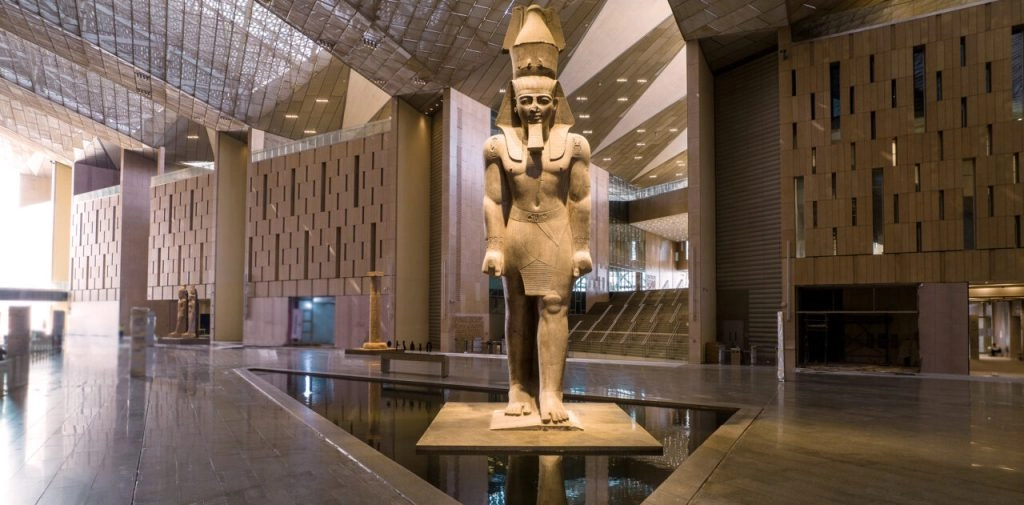
Nothing I’d read prepared me for the atrium. The Ramesses II statue is the first thing you see, and it’s enormous in a way that photos genuinely flatten. Behind it, the Grand Staircase rises through several floors, lined with statues and sarcophagi arranged almost like a timeline you climb through—Old Kingdom near the bottom, moving up through later periods as you ascend.
I’d planned for two hours. I stayed for four, and I still didn’t see everything.
The moment that actually got to me, more than I expected, was the Tutankhamun galleries. I’d seen pieces of that collection scattered across other museums over the years, but seeing the golden mask, the throne, and the chariots together, in one space, for what’s genuinely the first time since Howard Carter’s excavation, that’s a different feeling entirely. I found myself standing there longer than I meant to, and I noticed other visitors doing the same.
A Few Honest Tips From Someone Who Lives Here
If you’re planning your own visit, here’s what I’d tell a friend:
- Do the Pyramids first if you’re combining both in one day. I didn’t, and by the time I got to the Giza Plateau afterward, the light and the heat had both turned against me. The museum is air-conditioned, so it’s a better place to retreat to later in the day, not a warm-up before the outdoor site.
- Wear shoes you can walk in for hours. The museum sits on a genuinely large footprint, and the distance between galleries adds up fast.
- Budget more time than you think you need. Two hours covers the highlights if you move briskly. Four lets you actually stand with things.
- Book earlier than feels necessary, particularly for the Tutankhamun galleries, which can be a separate add-on depending on the day’s ticket structure.
Why This Matters If You’re Planning a Nile River Cruise Tour
For anyone building an itinerary around Cairo by Nile cruisers, I’d genuinely say the Grand Egyptian Museum belongs at the very start of the trip now, not as an afterthought squeezed in before a flight home. It reframes everything you see afterward, from Luxor’s temples to the tombs in the Valley of the Kings, because you’ve already stood in front of the objects that tie those places together.
It took me over two decades of living in this city to finally walk through those doors. I won’t make anyone wait that long for the recommendation: if a Nile cruise is on your itinerary, build in a real morning or afternoon for the GEM before you set sail. It’s worth every bit of the planning it now takes to get in.
Categories
- Egypt and Jordan Tours (12)
- Egypt Destinations (42)
- Egypt Nile Cruises (50)
- Egypt Sightseeing (19)
- Egypt Tour Packages (30)
- infographics (1)
-

Nile Cruisers Reviews
30 Apr 2026
-

Misleading Claims & False Information – Nile Cruisers™ Official Notice
08 Feb 2026
-
My Morning at the Grand Egyptian Museum: What It’s Really Like to Visit in 2026
12 Sep 2026
-

Why a Luxury Nile Cruise Should Be at the Top of Your Bucket List
11 Sep 2026
-
My First Look at Mövenpick SB Hayah Dahabiya: Launch Day with Our Longtime Nile Cruise Partners
02 Sep 2026
-
What’s Really Included in an All-Inclusive Nile Cruise?
28 Aug 2026
-
How to book private, “out-of-hours” temple visits to avoid the growing 2026 crowds
27 Aug 2026
-
Nile Cruise Luxor to Aswan vs. Aswan to Luxor: Which to Pick?
20 Aug 2026
-
Nile Cruisers Reviews
30 Apr 2026
-
Misleading Claims & False Information – Nile Cruisers™ Official Notice
08 Feb 2026
-
My Morning at the Grand Egyptian Museum: What It’s Really Like to Visit in 2026
12 Sep 2026
-
Why a Luxury Nile Cruise Should Be at the Top of Your Bucket List
11 Sep 2026
-
My First Look at Mövenpick SB Hayah Dahabiya: Launch Day with Our Longtime Nile Cruise Partners
02 Sep 2026
-
What’s Really Included in an All-Inclusive Nile Cruise?
28 Aug 2026






Comments